MEL BOCHNER
Inquire about this artistMel Bochner is a leading American Conceptual artist renown for developing a text-based practice that incorporates written words into art. After earing his BFA from the Carnegie Institute of Technology in Pittsburgh, Bochner moved to New York in 1964 and began working as a guard at the Jewish Museum. As a founding figure of the Conceptual Art movement in New York in the 1960s and 1970s, Bochner produced groundbreaking works that dissected the art object and painting as a valid medium. Along with other conceptual artists, Eva Hesse and Donald Judd, Bochner broke with Abstract Expressionism and traditional compositions. Artwork throughout his oeuvre questions how we experience depth, perspective and space, as well as language and color.
In the 1960s, Bochner developed a commitment to semiotic information, and pioneered the introduction of text and the use of language in visual artworks, making it part of the artwork itself. His text-based works explore language as content, image and medium, and expose the flexibility, chronology and shifting discourse of language. The artworks portray words drawn from Bochner’s interest in philosophy and popular culture’s colloquial and slang. His thesaurus works of synonyms reveal the evolving lexicon of the English language, such as “Amazing,” which begins with a biblical word referring to god and ends with the contemporary exclamation OMG. Bochner’s word-works incorporate painting and language, by rendering his witty word chains in his signature style of bright neon hues, geometric shapes and contemporary font.
Mel Bochner has exhibited at galleries and museums nationally and abroad, and his works are included in the collections of the Art Institute of Chicago, the Carnegie Museum of Art in Pittsburgh, the Courtauld Institute of Art in London, and the National Gallery of Art in Washington D.C., among others.
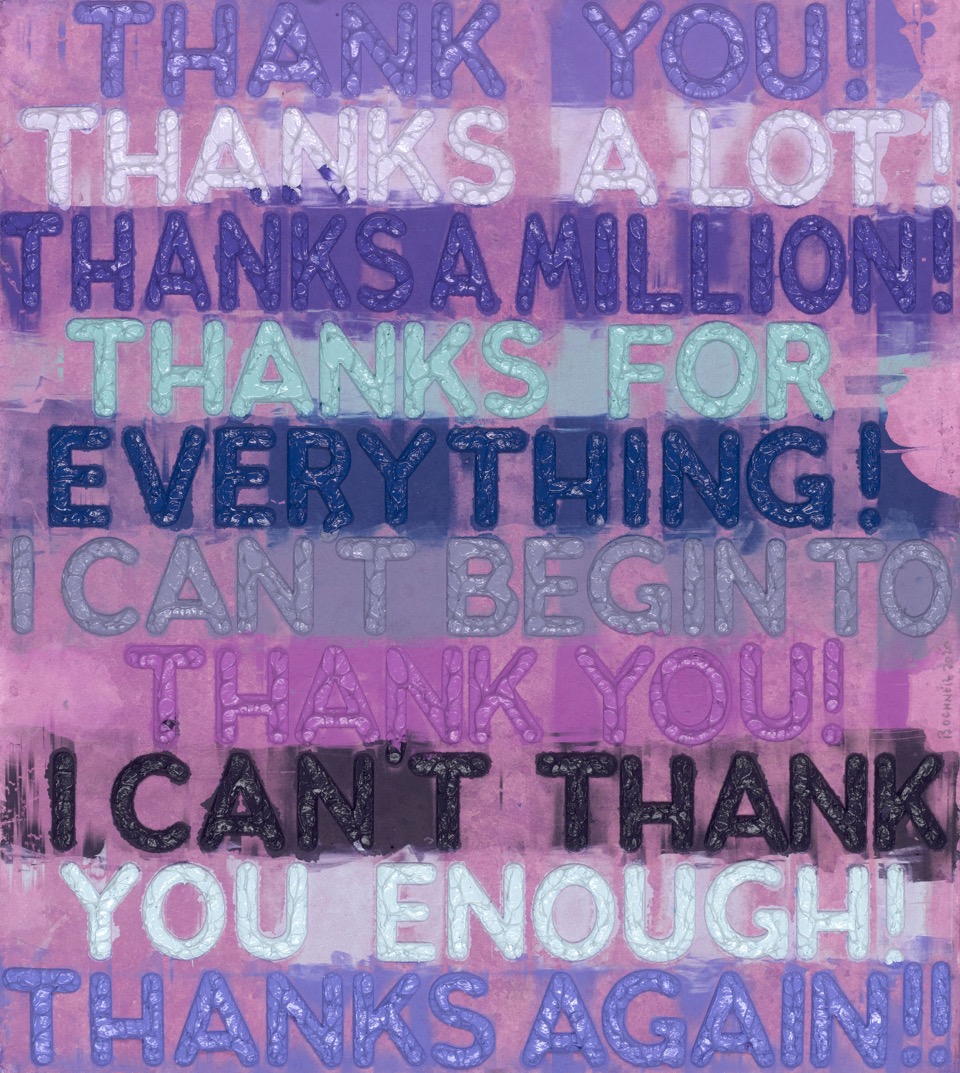
Mel Bochner
Thank You, 2020
Monoprint in oil with collage, engraving and embossment on handmade paper
23 1/2h x 20 3/4w in
.jpeg)
Mel Bochner
Blah, Blah, Blah, 2020
Monoprint in oil with collage, engraving and embossment on handmade paper
49h x 72w in
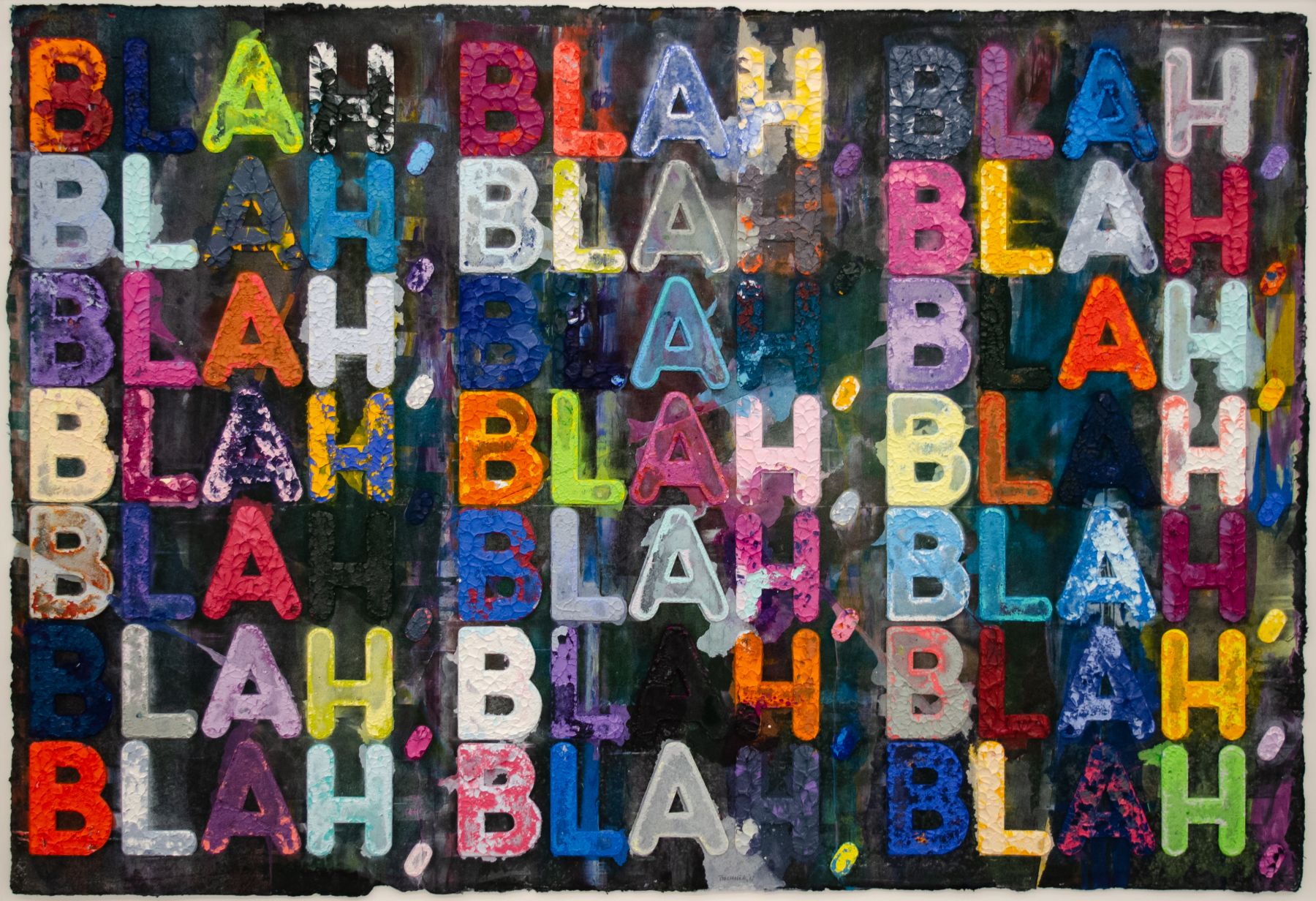
Mel Bochner
Blah, Blah, Blah, 2015
Monoprint
49h x 72w in
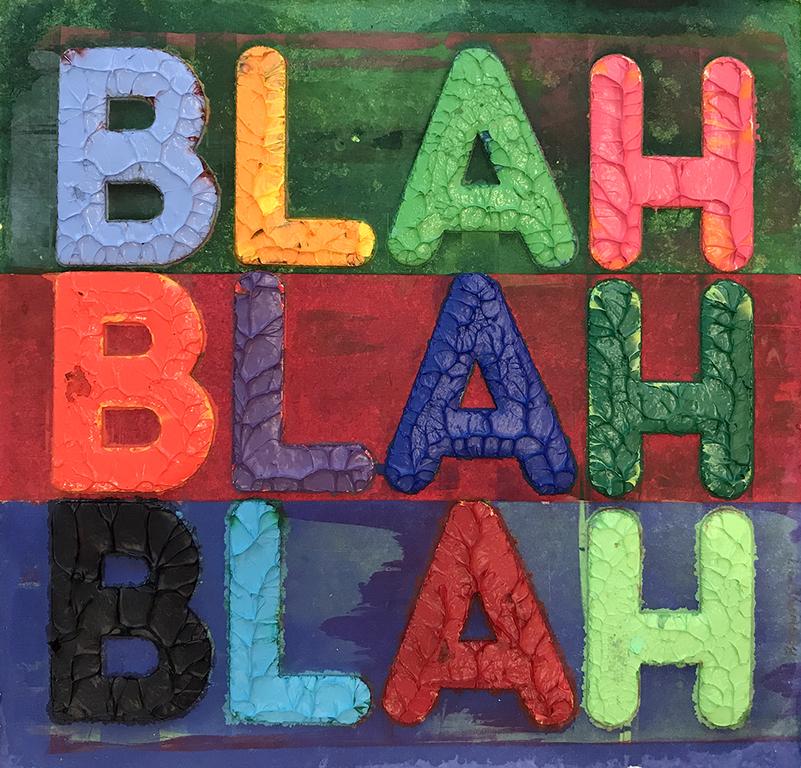
Mel Bochner
Blah, Blah, Blah, 2016
Monoprint with collage on paper
14h x 14w in
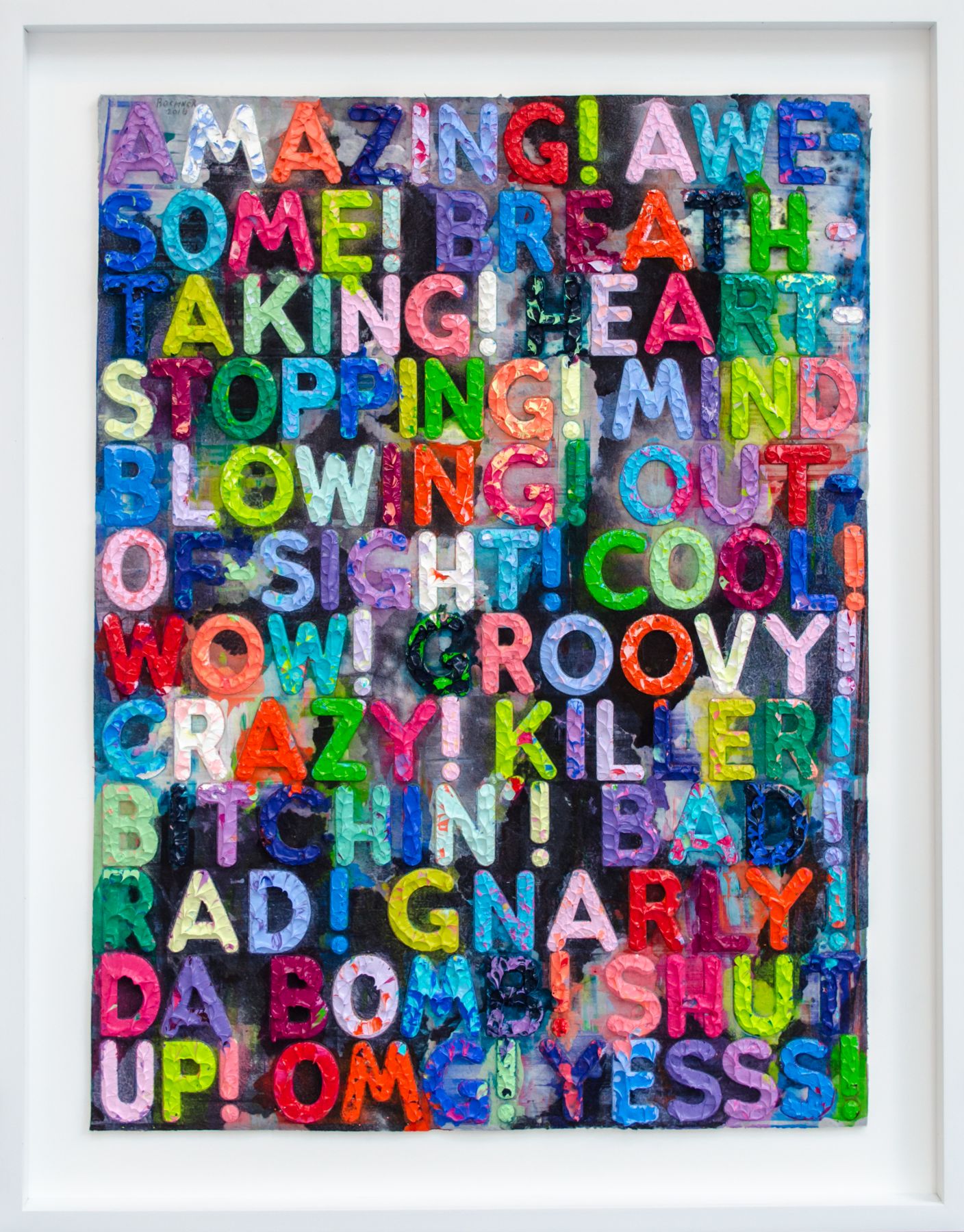
Mel Bochner
Amazing, 2016
Monoprint with collage, engraving and embossment on paper
30h x 22 1/4w in
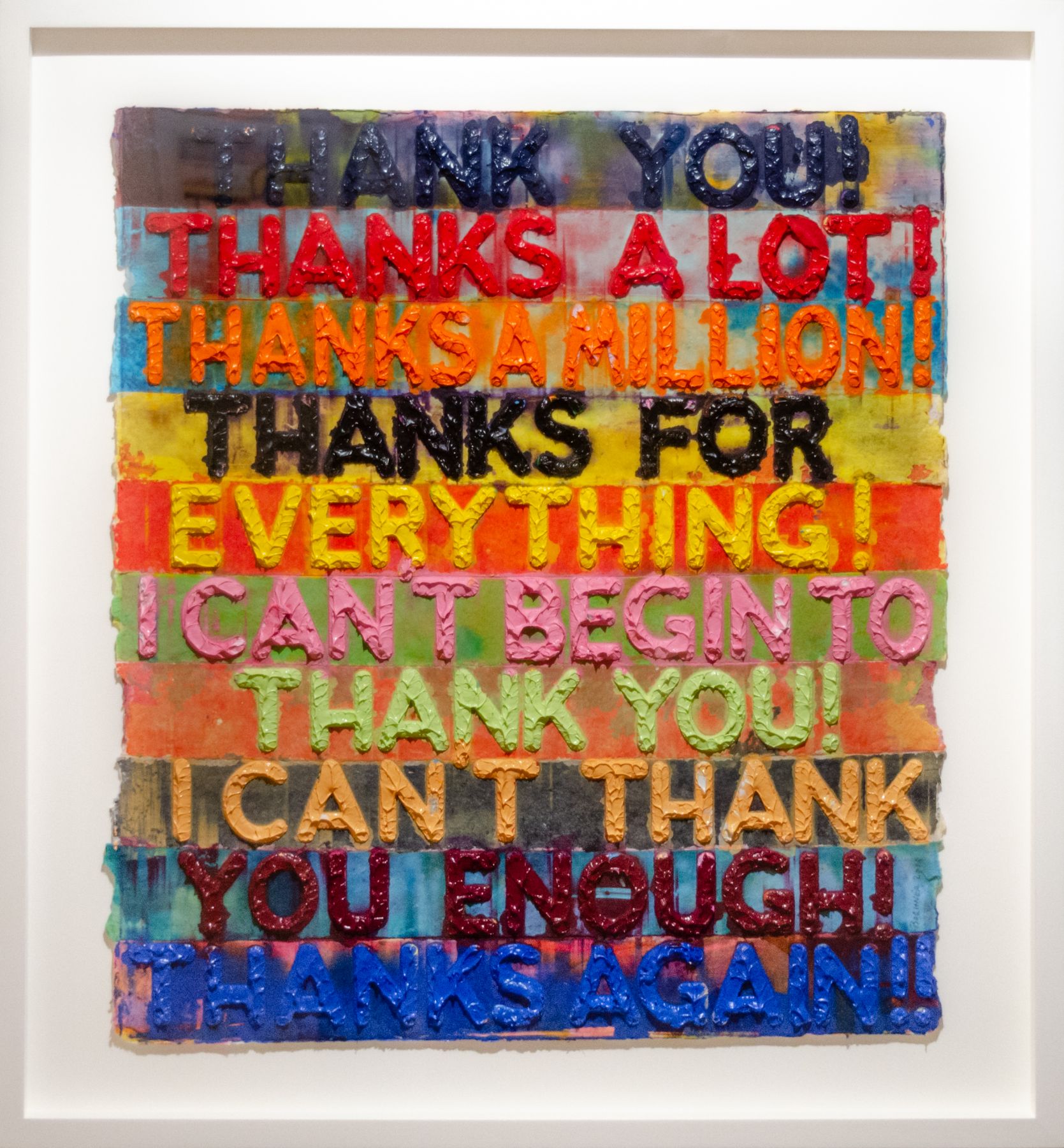
Mel Bochner
Thank You, 2018
Monoprint with collage, engraving and embossment
24h x 21 1/4w in
SOLD
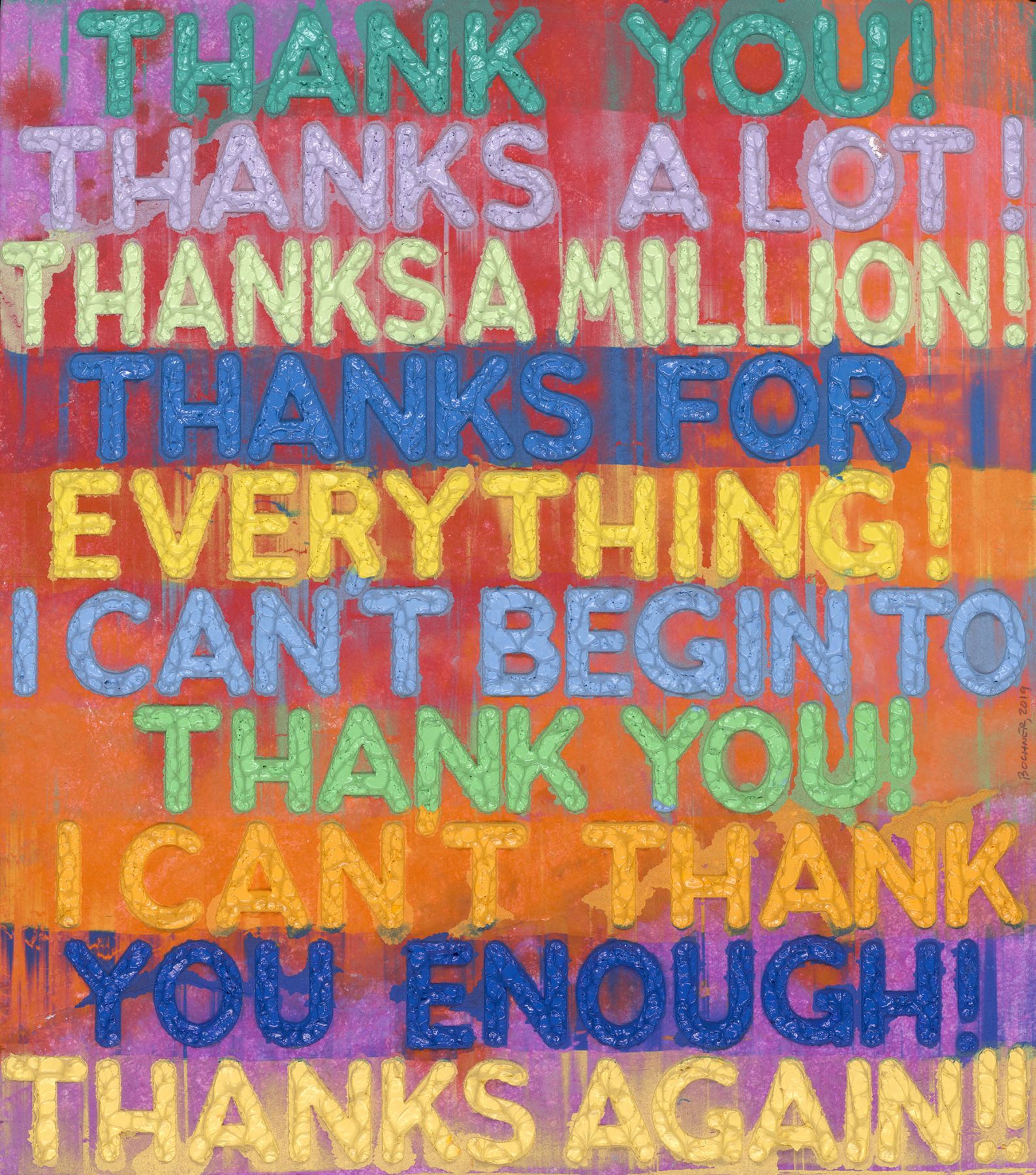
Mel Bochner
Thank You, 2019
Monoprint with collage, engraving and embossment on hand-dyed Twinrocker handmade paper
23h x 20 3/4w in
SOLD