Alexander Calder
Inquire about this artistAlexander Calder, was born in Philadelphia to artist parents, is one of the greatest innovators in the history of art. Most notably known for his invention of the mobile he was also prolific painter, lithograph maker, and producer of toys and other collectibles. Calder studied engineering at the Stevens Institute of Technology between, 1915 - 1919. In 1923, after numerous various jobs, Calder moved to New York to start his career as an artist, attending the Art Students League from 1923-1925. Working part-time at the National Police Gazette he was sent to the Ringling Brothers and Barnum & Bailey circus to sketch “circus scenes.” While there, the circus became his lifelong interest and is expressed in his first sculptural work, the “Cirque Calder,” a kinetic wire sculpture replicating certain circus acts. While in Paris he conducted full performances with these sculptures. It was then that he realized he really enjoyed working with wire and even began creating works of friends and political figures.
After some success with the wire sculptures, Calder continued to experiment with sculpture capable of moving both from manipulation by humans and by simple gusts of wind. The air currents in the room forcing sculpture movement gave Calder the idea of creating mobiles. In 1928, Calder was given his first solo gallery show at the Weyhe Gallery in New York. After this first show, his reputation continued to grow and exhibited at more shows in New York, Paris, and Berlin. In October 1930, Calder visited Mondrian and was so deeply impressed by his work that for three weeks after his visit, Calder solely created abstract paintings but realizing he was more drawn to creating sculptures. In 1931 Calder began creating self-supporting, abstract sculptures that moved. The first of these new creations moved by a system of cranks and motors, but were soon replaced by works that moved on air currents. In the 1950s Calder turned his attention to larger monumental sculptures; many examples of his work during this time are in public collections. As his prominence as a monumental sculptor grew so did his commissions. Shortly after yet another retrospective held at the Whitney Museum of American art, Calder passed at the age of 78, leaving an innovative and prolific artistic legacy.
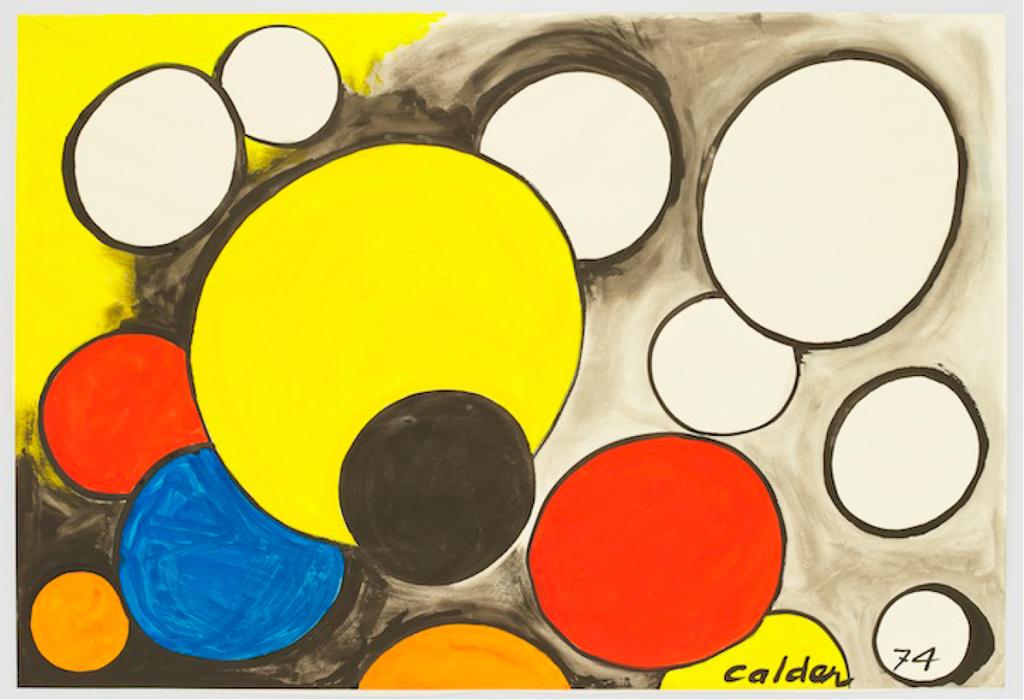
Alexander Calder
Appearing Orbs, 1974
Gouache and ink on paper
29 1/2h x 43 1/2w in
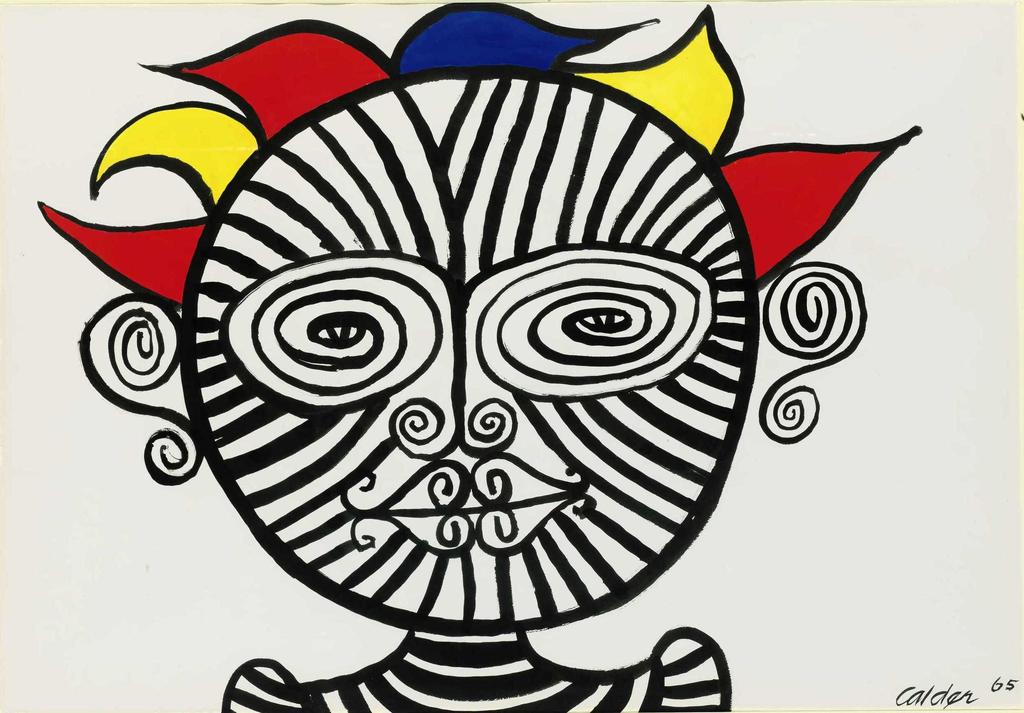
Alexander Calder
Tete, 1965
Gouache on paper
29 x 42 inches
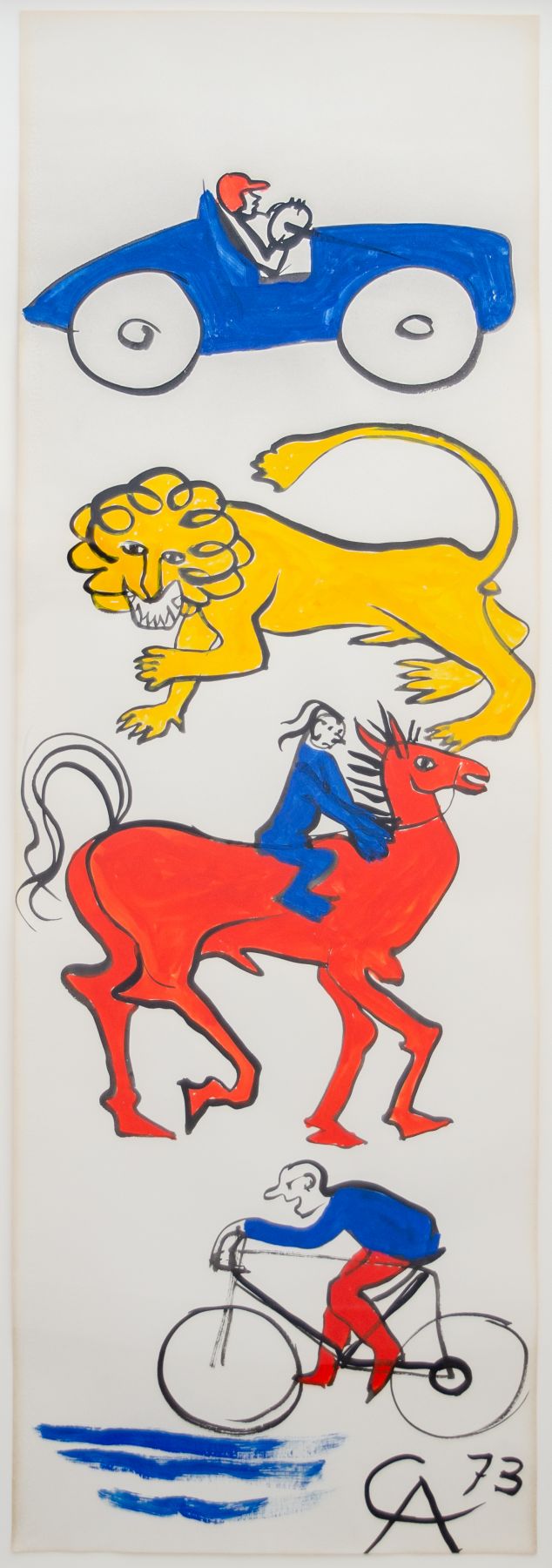
Alexander Calder
Untitled, 1973
Gouache and ink on paper
43h x 14 5/8w in